Resignation against the line: US counterterrorism chief publicly challenges Iran war
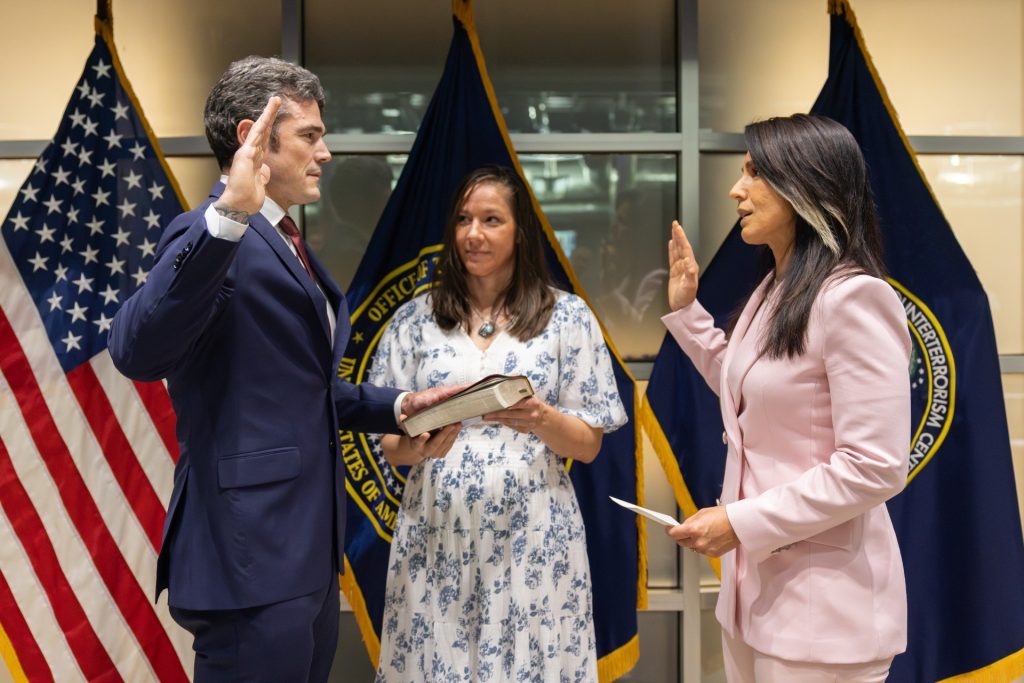
The resignation of Joseph Kent, most recently head of the US National Counterterrorism Center (NCTC), marks a rare moment of open dissent within the American national security establishment. In a statement published via his official X (formerly Twitter) account, Kent not only explains his personal decision but directly challenges key justifications for the current war with Iran.
“I cannot in good conscience support the ongoing war in Iran. Iran posed no imminent threat to our nation.” With these words, Kent fundamentally questions one of the core rationales for military intervention: the need to respond to an immediate threat.
A break with the official narrative
The US government, by contrast, justifies its actions precisely on the basis of such a threat. Officials point to Iran’s missile program and potential advances in its nuclear capabilities, arguing that these pose an acute danger to the United States and its allies.
Kent contradicts this assessment not only implicitly, but explicitly. His statement suggests that the strategic foundation of the conflict is not uncontested even within the US security apparatus itself.
Political influence – a sensitive allegation
Particularly explosive is another passage from his statement: “it is clear that we started this war due to pressure from Israel and its powerful American lobby.”
This formulation goes beyond a purely security-based critique. It points to political influence factors absent from official communication and touches on a highly sensitive area of US foreign policy.
Israel between security strategy and systemic change
The Israeli government under Prime Minister Benjamin Netanyahu also justifies the military escalation primarily in terms of the threat posed by Iran’s nuclear program. At the same time, public statements from March 2026 suggest that the objectives may go further.
In a statement made in the context of joint US-Israeli military strikes, Netanyahu said that “optimal conditions” were being created to enable a potential collapse of the Iranian regime, while emphasizing that such a change would ultimately have to come “from within.”
This dual messaging—security on the surface, systemic change as a possible outcome—points to a strategic ambiguity: the war is officially framed as defensive, yet contains elements that suggest an indirect pursuit of regime change.
Trump and the logic of limited wars
Donald Trump has followed a comparable line of argument. Publicly, the operation has been described as a limited military campaign, while at the same time political goals have been articulated that go beyond simple threat containment. These include repeated suggestions that political change in Iran is possible, or even desirable.
This discrepancy between official objectives and political rhetoric is what makes Kent’s resignation particularly significant. His position does not represent an isolated opinion, but rather points to potential tensions in how the conflict is being strategically assessed.
Further escalation through claims
Additional attention has been drawn to statements Kent reportedly made in an interview with Tucker Carlson. In it, he says:
“One of Trump’s closest advisors […] is suddenly assassinated and then we were told to stop investigating it.”
The claim suggests a possible link between domestic political developments and foreign policy decisions. However, there has been no independent verification of this assertion so far.
The shadow of past wars
In his statement, Kent also draws a historical parallel, referring to a “misinformation campaign.” The reference to the Iraq War is evident. At that time, military interventions were similarly justified by threat narratives that later proved to be flawed.
Today, the question arises once again whether security assessments and political objectives are aligned—or whether they are diverging.
A signal from within the system
Kent’s resignation is more than a personal decision. It is a rare signal from within a system that traditionally relies on cohesion.
Sources:
- Photo: Office of the Director of National Intelligence
- https://www.theguardian.com/world/live/2026/mar/19/iran-war-live-updates-oil-prices-gas-field-strikes-pentagon-more-funds-trump-news
- https://www.aljazeera.com/news/2026/3/2/trump-says-iran-war-projected-to-last-4-to-5-weeks-could-go-far-longer
- https://www.1news.co.nz/2026/03/19/ex-counterterrorism-chief-wasnt-allowed-to-tell-trump-of-iran-war-doubts
- https://www.hindustantimes.com/world-news/after-trumps-top-aide-joe-kent-quits-iran-war-started-under-israel-pressure-netanyahu-speaks-of-more-surprises-101773759927099.html
- https://www.aljazeera.com/opinions/2026/3/18/the-kent-warning-when-truth-escapes-the-war-machine
- https://www.theguardian.com/world/live/2026/mar/19/iran-war-live-updates-oil-prices-gas-field-strikes-pentagon-more-funds-trump-news
- https://www.washingtonpost.com/national/2026/03/05/trump-iran-israel-changing-rationale-terrorism-missiles/7af26ed2-18be-11f1-aef0-0aac8e8e94db_story.html
- https://www.whitehouse.gov/articles/2026/03/peace-through-strength-president-trump-launches-operation-epic-fury-to-crush-iranian-regime-end-nuclear-threat
- https://www.cfr.org/articles/gauging-the-impact-of-massive-u-s-israeli-strikes-on-iran
- https://www.reuters.com/world/middle-east/netanyahu-says-iran-no-longer-has-uranium-enrichment-capacity-2026-03-19
Analysiere Res.Publica und bleib informiert: Tiefere Einblicke in geopolitische Entwicklungen und ihre wirtschaftlichen Folgen direkt in dein Postfach. Hier zum Newsletter anmelden.