Analysis · Sudan · 20.04.2026
Three years of war. 12 million displaced. 25 million going hungry. A documented genocide in El Fasher. And an international system watching on, because its most influential members are profiting on both sides of the battlefield. A stocktake of the largest humanitarian catastrophe of our time, barely a headline in Europe.
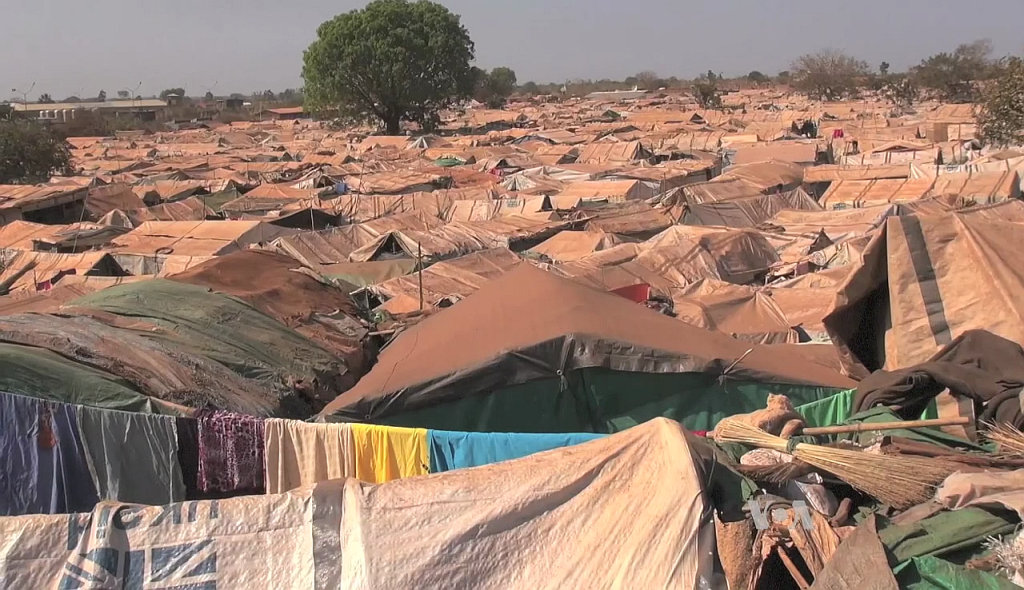
If you want to understand how the international system works when nobody wants to look, look at Sudan. Since April 15, 2023, the Sudanese Armed Forces under General Abdel Fattah al-Burhan and the Rapid Support Forces under Mohamed Hamdan Dagalo, known as Hemedti, have been fighting a war that after three years dwarfs every comparable crisis of the present. More than 12 million people have been displaced, making Sudan, according to the UNDP, the world’s largest displacement crisis. 25 million are going hungry. Famine has been officially declared in North Darfur and parts of Greater Kordofan.
And as the numbers grow, the international response slows down. The UN Humanitarian Needs and Response Plan for 2024 requested 2.7 billion US dollars. By mid-year, less than 40 percent had arrived. The UN Fact-Finding Mission report of February 2026 documents in El Fasher “the hallmarks of genocide” against the Zaghawa and the Fur. Thousands were murdered in three days. The rest of the world is debating other things.
What happened in El Fasher
Until October 26, 2025, El Fasher was the last city in Darfur still under the control of the Sudanese army and allied forces. The RSF besieged it for 18 months. According to the UN report, the population was during this time “systematically weakened by starvation, deprivation, trauma and confinement”. When the city fell, what followed was, in the words of the UN Human Rights Office, “a wave of violence, shocking in scale and brutality”.
The numbers from the UN report. In the first three days of the capture, at least 6,000 killings were documented. 4,400 inside the city. 1,600 more along escape routes. The UN writes explicitly that the actual death toll from the week-long offensive was “undoubtedly significantly higher”. The governor of Darfur spoke of 27,000 killed in the first three days alone. The Khartoum-based think tank Confluence Advisory estimated 100,000. The Yale Humanitarian Research Lab assessed that of the 250,000 civilians remaining in the city, nearly all had been killed, died, been displaced, or were in hiding.
RSF fighters, according to survivor testimony, said things like “Is there anyone Zaghawa here? If we find Zaghawa, we will kill them all” and “We want to eliminate anything black from Darfur”. Men and boys under 50 were specifically targeted, killed or abducted. Women and girls of the Zaghawa and Fur communities were systematically raped, often in groups, sometimes for hours or days. Those perceived as Arab were often spared. This is genocide by every standard of international law, and the UN mission says so: “The RSF acted with intent to destroy, in whole or in part, the Zaghawa and Fur communities in El Fasher. These are the hallmarks of genocide.”
Sudan by the numbers (April 2026)
- Duration of war: 3 years (since 15.04.2023)
- Total displaced: approx. 14 million (UN, April 2026)
- Of which internally displaced: over 8.8 million
- Refugees in neighbouring countries: approx. 4.5 million
- People going hungry: 25 million (over 50% of population)
- Famine-declared areas: North Darfur, Greater Kordofan, spreading
- Destroyed health facilities: approx. 61%
- Documented El Fasher deaths: minimum 6,000 in 3 days (UN), estimates up to 100,000
- UN funding need 2024: 2.7 billion USD / mid-2024: 40% covered
The external actors: arms to both sides
Sudan’s war is not an isolated internal event. It is a proxy conflict involving at least five external actors militarily, since day one. The United Arab Emirates, according to the Congressional Research Service, is the most significant external backer of the RSF. They supply weapons, financing, and at the same time co-hosted the Jeddah mediation process with the United States and Saudi Arabia. The pattern is remarkable: the state that arms one of the two warring parties sits at the mediation table.
Russia has armed both sides. Via the Wagner Group and its successor Africa Corps, RSF units were initially supplied with weapons and training. In parallel, negotiations were held with the SAF over a naval base at Port Sudan. The purpose of this double strategy, according to analysis by the Finnish National Defence University, is clear: secure influence no matter who wins, while extracting gold to bypass Western sanctions on Russia. The documented quantities run into the billions.
On the SAF side stand Egypt with logistical and arms support, and Iran, which supplies drones. Ukrainian special forces reportedly accompanied SAF units at times, mainly to strike Wagner operations and disrupt Russian gold smuggling networks. This is probably the only theatre of war in the world in which Ukrainian and Russian forces confront each other directly, without the European public taking much notice.
Behind this actor network sits a cynical calculation. The Emirates want influence in East Africa and control over ports on the Red Sea. Russia needs gold because its economy is under sanction. Saudi Arabia does not want Iran gaining ground in a neighbour. The US, since Trump’s return, has largely abandoned active conflict diplomacy. The sum: everyone in the mediators’ room has an interest in the war not ending as it ought to morally end, namely with accountability for the crimes.
The USAID collapse: how Trump destroyed the last functioning net
On January 20, 2025, the first day of his second term, President Trump froze all US foreign assistance by executive order for 90 days. What followed was not a pause. It was collapse. On July 1, 2025, USAID was formally dissolved and folded into the State Department. Secretary of State Marco Rubio announced the termination of 5,200 contracts. According to analysis by the Century Foundation, around 86 percent of foreign aid programs were terminated. The US, according to Operation Broken Silence, had been providing close to 50 percent of all humanitarian aid to Sudan. Their withdrawal was not one cut among many. It was the end of the system keeping millions alive.
Concretely. The so-called Emergency Response Rooms, grassroots mutual aid structures that were the only functioning distribution network in Sudan after the state’s collapse, were funded to 75 to 80 percent by USAID. According to NBC News, before the executive order they were running 742 community kitchens in Khartoum alone, feeding around 816,000 people. After the funding freeze, 80 percent of these kitchens closed within weeks. Nationwide, according to Middle East Eye, about 1,500 of 1,460 kitchens shut down. 1.8 million people in famine-affected areas lost access to food.
The supply chains collapsed. In warehouses in Cameroon, Djibouti and elsewhere, as Middle East Eye reported, rice, wheat, lentils and beans destined for Sudan began to rot. The Famine Early Warning System, FEWS NET, which since the 1980s had provided early warnings of hunger crises, was taken offline. The Washington Post documented reports of mothers whose babies starved after the US-funded soup kitchens closed, while older siblings died begging for food.
The long-term projection is on the table. A Lancet study calculated that the dismantling of USAID will cause 14 million additional deaths worldwide over the next five years, a third of them children under five. In Sudan, the hunger catastrophe will, according to famine expert Alex de Waal, be the deadliest in half a century. In 2024, by various estimates, about half a million people already died of hunger and disease in Sudan alone. 2025 got worse. 2026 is happening now.
Tom Perriello, the last US special envoy to Sudan under the Biden administration, put it without euphemism: the USAID cuts “came with a body count” in Sudan.
The pattern: the system only addresses what doesn’t hurt to address
The gap between the problem and the response in Sudan has grown so large that budget constraints no longer explain it. The international response targets the crisis dimensions that generate humanitarian visibility, namely food and health. Precisely the dimensions that would matter politically remain untouched. Specifically: the arms embargo, accountability for war crimes, protection against further massacres, economic stabilisation, reconstruction of destroyed communities, and political voice for Sudanese civil society.
The UN Security Council’s arms embargo still applies only to Darfur, not to the rest of the country. Expansion has been discussed repeatedly and failed, most recently on Russian and Chinese vetoes. In February 2026, after the El Fasher massacre, the Security Council imposed sanctions on four RSF commanders, including deputy commander Abdul Rahim Hamdan Dagalo. Four individuals after more than 6,000 documented deaths in three days. This is not policy with teeth. It is symbolic cosmetics.
The Jeddah talks, launched by the US and Saudi Arabia in 2023, collapsed by late that year after both parties violated ceasefire agreements. Sudanese civil society, particularly the women’s organisations that had driven the democratic transition in 2019, had been systematically excluded from negotiations. The US-AU-IGAD ALPS working group never produced results. The African Union roadmap is dormant. All relevant mediation processes are effectively dead.
Why Europe stays silent
European disinterest is a story of its own. Britain and the EU cut their development budgets in 2025 to free up money for defence, after Washington pulled back on Ukraine support. The UK development minister resigned in March 2025 explicitly in protest, stating the cuts would hit Gaza and Sudan. In Germany, budget lines relevant to Sudan in the 2026 federal budget are down by several hundred million euros in real terms compared to 2023.
The cynical arithmetic behind this silence is simple. Sudan does not border Europe strategically. Its refugees flee mostly to Chad, Egypt and South Sudan, not to Europe. There are no economic interests pressing European governments to act. The Emirates, one of the war’s principal actors, are trading partners. Egypt, too. Russia is sanctioned anyway, but direct pressure on Moscow over Sudan would have to be opened as a second front alongside Ukraine, and the energy for that is missing.
The result is a crisis that runs almost entirely under the radar of European public attention. While the Gaza war produces daily headlines, Sudan exists in the German media landscape mostly as brief wire reports. That Darfur is currently the site of a genocide larger in scale than anything Europe has documented since Srebrenica is barely noticed.
What would still be possible
There are concrete steps that are not utopian but politically feasible, if the will were there. First: the UN arms embargo must be extended to cover the entire country, with mandatory reporting obligations for all states supplying military material to either party. That means concretely that the Emirates would have to justify themselves. It means Russia would have to justify itself. It means that conduct currently tolerated as collateral becomes documented violation of international law.
Second: any future mediation must include Sudanese civil society and women’s organisations as full negotiating parties, not peripheral figures. The systematic exclusion of these actors is one of the main reasons every previous process has collapsed. Anyone serious about ending the war must include those who are not fighting but keeping society running.
Third: European governments currently prioritising defence spending must commit a clear sum for Sudan’s humanitarian response that at minimum fills the US gap of roughly 800 million dollars per year. That is less than half of Germany’s industrial electricity price subsidy. It would be affordable. It is not happening.
✦ ✦ ✦
Three years after the war began, nearly six months after El Fasher fell, the front has shifted to Kordofan. The RSF’s playbook, according to Human Rights Watch, follows the same pattern as in Darfur: siege, attrition, systematic violence along ethnic lines. One documented genocide was not prevented. A second is in the making. And while this happens, the German public debates fuel tax rebates and industrial electricity subsidies, two billion euros approved in a single week, both sums larger than the entire UN funding requirement for Sudan. The proportions are known. The response is too.
Sources
- UN Fact-Finding Mission for Sudan, “Hallmarks of Genocide in El-Fasher”, February 2026: OHCHR
- UN Human Rights Office on El Fasher, February 2026: OHCHR
- UN News on the genocide report, February 2026: UN News
- Human Rights Watch, interview on El Fasher fall, February 2026: HRW
- UNDP Sudan Annual Report 2024: UNDP
- UN OCHA Sudan Humanitarian Response Dashboard 2024: OCHA
- Congressional Research Service, “The war and humanitarian crisis in Sudan” (IF12816), 2025: CRS
- Ingman, C., “Great power ambitions and proxy wars: Sudan as a battlefield between Russia and Ukraine”, National Defence University Finland, 2024: NDU
- NBC News on USAID cuts and Sudan kitchens, February 2025: NBC
- Middle East Eye on USAID collapse and supply chains, November 2025: MEE
- Operation Broken Silence on USAID impact in Sudan, July 2025: OBS
- ABC News: Sudan as a case study of USAID cuts, July 2025: ABC
- The Conversation, Alex de Waal on USAID freeze in South Kordofan, April 2025: The Conversation
- Oxfam, overview of USAID cuts, 2025: Oxfam
- Musa et al., “Public health consequences of armed conflict in Sudan”, Public Health Challenges, 2024: DOI
- Policy Center for the New South, “The ongoing war in Sudan”, 2024: PCNS
- Carter, B. & Satti, H., “Supporting conflict-sensitive, locally-led humanitarianism in Sudan”, Disasters, 2025: DOI
- The New Humanitarian, “Documenting three years of war in Sudan”, April 2026: TNH
- The Century Foundation, “The Foreign Aid Wipeout”, December 2025: TCF