
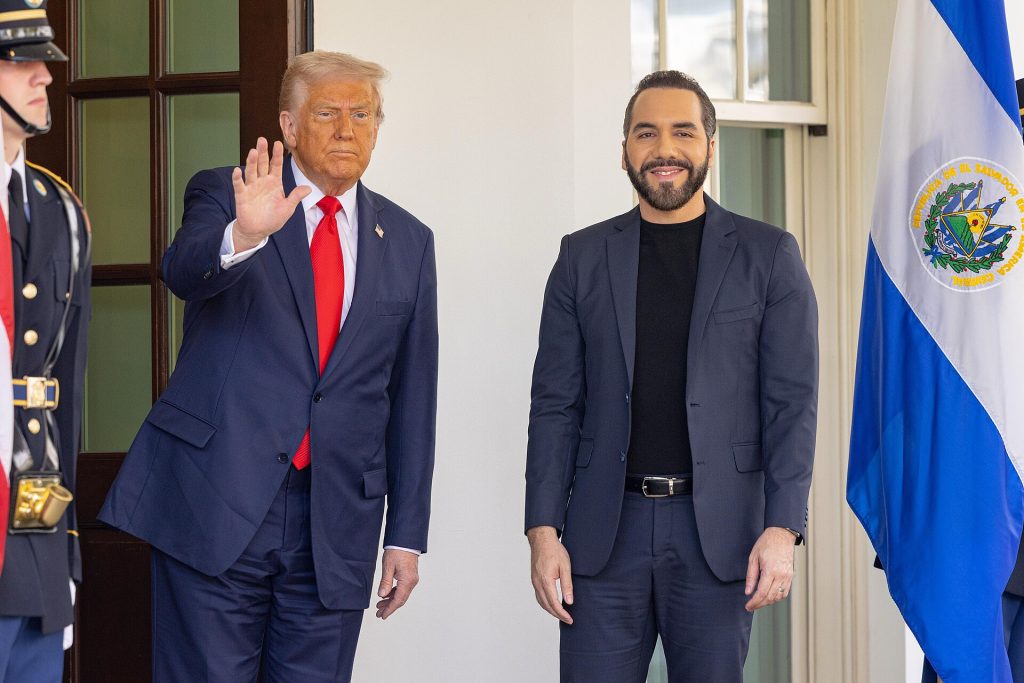
Two days ago, a millionaire lawyer with dual U.S.-Colombian citizenship and no prior political experience won Colombia’s presidential election by less than one percent. Abelardo de la Espriella, who calls himself “El Tigre,” campaigned on building 10 mega-prisons modeled after El Salvador’s CECOT, cutting the state by 40%, resuming fracking, and dismantling the 2016 peace agreement that ended half a century of civil war. Trump posted on Truth Social: “Won, BIG!”
Colombia is not an isolated case. It is the fifth country in Latin America to elect a right-wing president in seven months.
The Chain
Honduras, November 30, 2025. Nasry Asfura of the conservative National Party won with 40.3% in an election marred by a three-week vote count that drew international concern. Trump endorsed Asfura days before the vote, telling Hondurans on Truth Social that he was the only candidate Washington would work with. His opponent called it electoral interference. The margin was 0.74%.
Chile, December 14, 2025. José Antonio Kast won the presidential runoff with 58.2%, the second-highest margin since Chile’s return to democracy in 1990. Kast, a defender of the Pinochet dictatorship whose father was a member of the Nazi Party before emigrating to Chile in 1950, ran on mass deportation and a police force modeled after U.S. Immigration and Customs Enforcement. He received 7.2 million votes, the highest total in Chilean history. Supporters at his victory rally wore red caps reading “Make Chile Great Again.”
Costa Rica, February 1, 2026. Laura Fernández, a 39-year-old political scientist handpicked by outgoing President Rodrigo Chaves, won with 48.5% in the first round, avoiding a runoff in a field of 20 candidates. Her party secured 31 of 57 legislative seats, the first single-party majority since 1990. Her central promise: completing a mega-prison built with Bukele’s blessing and declaring a state of emergency in gang-controlled areas. She is opposed to abortion and has pledged to double the maximum prison sentence for women who have one to six years.
Peru, April 12, 2026. In a general election with 36 presidential candidates, right-wing Keiko Fujimori leads the preliminary count, with a tight race for the second runoff spot between left-wing Roberto Sánchez and right-wing Rafael López Aliaga. Final confirmation has been delayed by the review of more than 15,000 challenged ballots.
Colombia, June 21, 2026. De la Espriella won 49.7% against Iván Cepeda’s 48.7%, a margin of roughly 250,000 votes. Trump endorsed him earlier in June. The election had the highest turnout since Colombia introduced the runoff system in 1994. Outgoing President Gustavo Petro alleged irregularities without providing evidence. Cepeda refused to concede.
The Shared Playbook
Five elections in five countries over seven months. The winners share a remarkably consistent profile. All ran as tough-on-crime outsiders or anti-establishment figures. All cited El Salvador’s Nayib Bukele as a model. All promised mass deportation, mega-prisons, or both. All benefited from public frustration with rising violence and migration. And all received either direct endorsement or vocal support from the Trump administration.
The playbook has a template: identify public fear (crime, gangs, migration), propose a strongman solution (mega-prisons, emergency powers, military deployment), frame opponents as weak or corrupt, and signal alignment with Washington. The policies differ in detail but converge in tone. Kast in Chile proposed an ICE-modeled police force. Fernández in Costa Rica broke ground on a CECOT-style prison. De la Espriella in Colombia promised 10 mega-prisons. The brand travels.
The International Crisis Group noted before Colombia’s election that Washington would use “public messaging, threats or diplomatic pressure” to shape the outcome, and that regardless of who won, the U.S. would “flex its institutional relationships and financial support” to promote its interests. The Trump administration’s 2026 National Security Strategy explicitly names reducing the influence of Russia, China, and Iran in Latin America as a goal, to be achieved partly through supporting aligned governments.
The Vacuum
The right-wing wave did not emerge in a vacuum. It coincides with the dismantling of the primary instrument of U.S. soft power in the region.
In 2023 and 2024, USAID allocated approximately $1.7 billion to Latin America and the Caribbean, funding anti-corruption programs, peace agreement implementation, migrant integration, food security, and anti-narcotics operations. In January 2025, the Trump administration froze all foreign development assistance. By July 2025, USAID was officially shut down. The Rescissions Act of July 2025 clawed back an additional $9 billion globally. In total, 86% of USAID awards were terminated.
The impact in the region was immediate. El Salvador, Honduras, and Guatemala each lost 95% or more of their USAID program value. In Colombia, more than 75% of international aid had come through USAID, funding everything from Venezuelan migrant integration to implementation of the 2016 peace agreement. Programs that addressed root causes of migration, violence, and instability were shut down overnight.
Florida Representative Anna Paulina Luna explicitly connected the shutdown to the political shift, noting that four right-wing governments had risen to power since USAID was defunded. The logic is not subtle: withdraw the programs that stabilize civil society, then back candidates who promise to restore order through force.
— International Crisis Group, May 2026, one month before Colombia’s election
The European Mirror
Latin America’s shift does not exist in isolation. Across the Atlantic, a parallel pattern is unfolding.
Italy elected Giorgia Meloni in 2022 on an anti-immigration, law-and-order platform. The Netherlands gave Geert Wilders’ PVV the most seats in parliament in November 2023. Germany’s AfD reached record polling numbers through 2024 and 2025. France’s Rassemblement National won the first round of parliamentary elections in June 2024 and continues to shape the national agenda. Hungary’s Viktor Orbán has governed along these lines since 2010 and has become a model for the movement globally.
The surface-level parallels are obvious: crime, migration, and cultural anxiety as mobilizing issues. Strongman rhetoric. Distrust of multilateral institutions. A framing of politics as insiders vs. outsiders.
But the connections run deeper than shared messaging. The networks are real. The Conservative Political Action Conference (CPAC) has held events in Budapest, Mexico City, and Buenos Aires. Milei, Kast, Bukele, Meloni, and Orbán appear at the same conferences, cite each other’s policies, and coordinate through overlapping advisory circles. Steve Bannon’s “The Movement,” launched in 2018 to build a populist-right international, may have stalled organizationally but its vision of a coordinated right-wing network has materialized through other channels.
Europe already recognizes the pattern. The real concern is the infrastructure behind it. Direct presidential endorsements, strategic defunding of civil society programs, diplomatic pressure on aligned candidates: these tools have been deployed openly across Latin America over the past seven months. EU member states depend on U.S. security guarantees and trade relationships. The leverage exists. It has simply not yet been exercised as openly as it has in Honduras or Colombia.
What Comes Next
Brazil holds elections in October 2026. Lula’s popularity has been declining. The right-wing opposition is consolidating. Peru’s final results remain unresolved. Bolivia, which ousted socialists in 2025, is navigating its own post-transition instability.
By the end of 2026, right-wing governments will likely govern every major economy in South America except Brazil. The 2020s “Pink Tide” is over.
For Colombia specifically, the stakes are immediate. De la Espriella has signaled he will halt implementation of the 2016 peace agreement, which has been credited with a historic decline in political violence but remains deeply polarizing. He won in 14 of 32 departments while Cepeda won in 18, a geographic divide that mirrors the country’s class and regional fractures. With a margin of 250,000 votes and no legislative majority, governing from the hard right will require either coalition-building or confrontation.
As the International Crisis Group warned before the vote: “The next elections may also decide the fate of the 2016 peace agreement, which marks its tenth anniversary in 2026.”
The Bottom Line
Five countries. Seven months. The same playbook everywhere: crime fear, strongman promises, Bukele as blueprint, Washington’s blessing. Every winner ran as an outsider. Every winner aligned with the Trump administration. And in the background, the one U.S. agency that funded civil society, anti-corruption, and peace programs across the region was shut down.
This is not a coincidence. It is a strategy. Latin America is being reshaped, and Europe, facing the same populist pressures with the same rhetorical toolkit, should be paying close attention. The playbook that worked in Tegucigalpa, Santiago, San José, and Bogotá was not designed to stop there.
Sources
- Americas Quarterly: De La Espriella Wins Colombia’s Election by Narrow Margin — americasquarterly.org
- ABC News: Trump-backed right-wing lawyer appears to win Colombia’s election — abcnews.com
- Euronews: US-backed political newcomer wins Colombia election — euronews.com
- International Crisis Group: Right and Left Vie for Victory in Colombia under U.S. Shadow — crisisgroup.org
- NPR: Trump-backed Nasry Asfura declared winner of Honduras’ presidential vote — npr.org
- CNN: Trump-backed ex-mayor declared winner of Honduran election — cnn.com
- Americas Quarterly: What Kast’s Victory Means for Chile — americasquarterly.org
- NPR: Chile shifts sharply right as Kast wins the presidency — npr.org
- Wikipedia: 2025 Chilean general election — wikipedia.org
- Americas Quarterly: Laura Fernández Wins Big in Costa Rica — americasquarterly.org
- CNN: Costa Rica elections: Right-wing populist Laura Fernández claims victory — cnn.com
- GIS Reports: Latin America continues its rightward shift — gisreportsonline.com
- Newsweek: Colombia Election Shows ‘Trump Effect’ — newsweek.com
- DevelopmentAid: USAID cuts to Latin America — developmentaid.org
- DevelopmentAid: One year on, what the collapse of USAID has cost the world — developmentaid.org
Res.Publica is an independent political data platform and data journalism project. We track elections, legislation, lobbying, and democratic indicators across Europe and beyond, and turn that data into analysis anyone can read. No paywall, no ads, no corporate backing.
Almost all of this, the research, the writing, the code behind the dashboard, the data pipelines, is done by one person, in spare time, for free. If you find the work valuable, the best ways to support it are to follow the community and, if you can, buy me a coffee. Every bit helps keep this running and independent.
→ Join the community on Reddit
→ Buy me a coffee
→ respublica.media · Democracy Dashboard · Newsletter