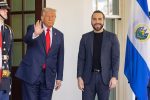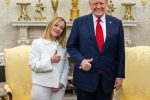
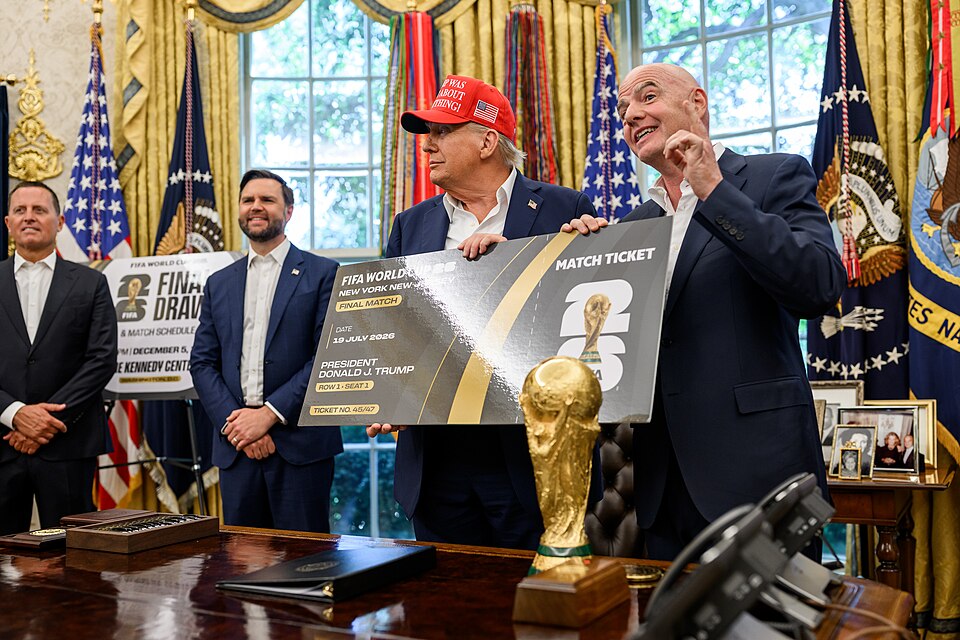
On December 5, 2025, FIFA president Gianni Infantino stood beside Donald Trump at the Kennedy Center in Washington and handed him a trophy. The occasion was the draw for the 2026 World Cup. The prize was the inaugural FIFA Peace Prize, and Trump was its first recipient, honored, in Infantino’s words, for his “tireless efforts to promote peace.” Weeks earlier, Trump had publicly complained about not winning the Nobel. Weeks later, the venue itself would be renamed the Trump-Kennedy Center.
Human Rights Watch wrote to FIFA asking who the judges were, what the criteria had been, and how the decision was made. According to the London School of Economics, they received no reply.
This is one scene from a decade-long story. To understand why it matters, you have to go back to how Infantino got the job in the first place.
The Man Who Promised to Clean Up
In the early hours of May 27, 2015, Swiss police entered the Baur au Lac hotel in Zurich and arrested several FIFA officials at the request of U.S. authorities. The corruption scandal that followed brought down Sepp Blatter and exposed decades of bribery at the heart of world football. FIFA was, in the words of the reform committee assembled to fix it, an organization in crisis.
Gianni Infantino, a Swiss-Italian lawyer who had worked for European football’s governing body UEFA, rose out of that wreckage on a promise of renewal. “We will restore the image of FIFA and the respect of FIFA,” he told the assembled football leaders in his February 2016 acceptance speech, “and everyone in the world will applaud us.”
The 2015 reform committee, of which Infantino himself was a member, had a specific diagnosis. The FIFA president held too much power. According to ESPN’s reporting on those reforms, the panel recommended that the president should have a more figurehead role, with the secretary general acting as a CEO running day-to-day operations. Infantino’s own manifesto stated that all of FIFA’s 200-plus member associations “have to be effectively and meaningfully involved in decision-making processes.” Power, everyone agreed, needed to be spread out.
A decade later, the analysis from FIFA observers is that the opposite happened.
What He Built Instead
Infantino’s central campaign promise in 2016 was not, primarily, about ethics. It was about money. He pledged to distribute $5 million to every national federation. “The money of FIFA is your money,” he told the room, to applause. That figure has since grown to up to $8 million per federation every four years.
Each of FIFA’s 211 member associations gets one vote in the presidential election, regardless of size. A tiny federation with a few thousand registered players carries the same weight as Germany or Brazil. The non-profit research group FairSquare, in a report quoted by Yahoo Sports, described the president’s power as “rooted in a model of patronage that disincentivizes ethical conduct.” Others quoted in the same report called the development payments “vote-buying” or “de facto bribes.” These are characterizations made by named critics, not legal findings. FIFA, for its part, says funding comes with oversight: every federation is audited annually, and according to FIFA’s chief member associations officer, 14 federations currently have funding suspended or restricted over concerns about misuse.
The 2015 committee wanted the president weakened and the membership empowered. According to ESPN and Play the Game, Infantino instead operated as an executive leader, the exact role the reforms were designed to prevent. He stood for re-election unopposed in 2023, and no challenger is expected when he runs again in 2027.
The Pay Package
FIFA is registered as a non-profit organization under Swiss law. In March 2026, in its own published financial report, FIFA disclosed that Infantino’s total compensation had reached approximately $6 million. His annual bonus had risen by 33% to $2.78 million, in the year FIFA staged its new, financially challenged Club World Cup. His base salary remained $2.6 million.
The same report disclosed that Infantino lives with his family in Miami, where FIFA opened a major hub and relocated its legal department, and that FIFA covers school fees for one of his daughters. His salary is set by a compensation sub-committee led by Swiss banker Bruno Chiomento, who also chairs the body FIFA describes as its “independent” Governance, Audit and Compliance Committee.
For comparison, the reform-era model envisioned the secretary general, not the president, as the organization’s chief executive. FIFA’s revenue for the 2023-2026 cycle is set to reach at least $13 billion, with a projection of $14 billion for 2027-2030.
The Ticket Prices
The clearest public controversy of Infantino’s tenure arrived with the 2026 World Cup itself. For the first time, FIFA introduced dynamic pricing, where ticket costs rise and fall with demand, like airline seats.
According to NPR, FIFA initially sold the most expensive tickets to the final, set for New Jersey on July 19, at $6,730. By the sales windows opening in April, the same category cost $10,990. For context, the most expensive tickets at the 2022 World Cup in Qatar were around $1,600. FIFA’s cheapest $60 tickets existed, but according to the Associated Press and PBS, they were available in the hundreds per game rather than the thousands. Sixty days before the tournament, the average cheapest group-stage ticket in Los Angeles, where the U.S. team plays, was $1,040 on FIFA’s resale market.
The reaction was significant. The attorneys general of New York and New Jersey launched a joint investigation into FIFA’s ticketing practices, later issuing a subpoena. Asked about the prices, Infantino said fans “should chill.” Even Trump, whose relationship with Infantino is close, told the New York Post he “wouldn’t pay it either.”
FIFA argues it is a non-profit and reinvests over 90% of its revenue back into football. The New York and New Jersey attorneys general are nonetheless examining whether the ticketing practices violated consumer protection law. No findings have been published as of this writing, and the investigation is ongoing.
The Company He Keeps
Infantino’s critics have long focused on his proximity to authoritarian leaders. The record, as documented by his public biography and multiple outlets, is extensive. He accepted the Order of Friendship medal from Vladimir Putin in connection with the 2018 World Cup in Russia. He defended Qatar’s human rights record around the 2022 World Cup, where Human Rights Watch and Amnesty International had documented migrant worker deaths and allegations of forced labor. He travels on an aircraft provided by the state of Qatar. He played a central role in awarding the 2034 World Cup to Saudi Arabia through a process that restricted competing bids.
In February 2026, Infantino became a citizen of Lebanon, following a meeting with the Lebanese president. The same month, during the World Cup, he traveled by Qatar Airways private jet to attend ten matches in seven days across multiple host cities, drawing criticism over the carbon footprint.
And then there is Trump. The 2026 World Cup organizing taskforce is chaired by Trump and, according to the LSE, headquartered in Trump Tower in Manhattan. FIFA opened an office in Trump Tower in July 2025. At the FIFA Congress in Asunción in May 2025, Infantino arrived roughly two hours late after meeting Trump in the Middle East, prompting UEFA’s delegation to walk out in protest.
— Gianni Infantino, acceptance speech, February 2016
The Verdict Is Not Unanimous
It would be unfair to present only one side. By the metrics Infantino set for himself in 2016, he has delivered spectacularly. As Fortune noted, he expanded the men’s and women’s World Cups, willed a lucrative new Club World Cup into existence, and drove FIFA’s revenue to record highs. Development money does reach federations, and for small football associations in the global south, that funding is real and meaningful. FIFA told Fortune it had “implemented extensive reforms and taken concrete steps to regain its reputation as a credible institution.”
Bonita Mersiades, a former Australian football executive who helped expose FIFA’s corruption in the 2000s, told Fortune that the organization is now “almost too big to fail or too big to pull apart.” Overhauling it, she said, is “very, very difficult. Everybody wants their country to win the World Cup.”
That is the bind. The money that critics call patronage is the same money that builds pitches and pays for youth programs in places that football’s old European core ignored for decades. Both things are true at once.
The Bottom Line
Ten years ago, Infantino was elected to drain the swamp. He came to power promising to weaken the presidency, empower the members, and restore credibility after the worst corruption scandal in the sport’s history.
A decade on, the presidency is more powerful than it was under Blatter. The members are bound by development money that critics openly call vote-buying. The credibility question has shifted from envelopes of cash in Zurich hotel rooms to a different kind of problem: a non-profit run by a $6 million executive who keeps company with autocrats, hands peace prizes to the president hosting his tournament, and tells priced-out fans to chill.
The 2026 World Cup will likely be the most profitable in history. Whether it is also the most compromised is a question FIFA observers, human rights groups, and now two American attorneys general are actively asking. The football will be spectacular. What surrounds it is the story.
Sources
- Inside World Football: FIFA earmarks revenue to federations, Infantino’s pay hits $6m (FIFA financial report) — insideworldfootball.com
- ESPN: Infantino lands $6M pay package following inaugural Club World Cup — espn.com
- ESPN: FIFA president Infantino gets 33% pay rise (2015 reform recommendations) — espn.com
- Yahoo Sports: The ‘legal bribery’ and duality of Gianni Infantino’s FIFA (FairSquare report) — sports.yahoo.com
- Play the Game: Infantino’s FIFA, ten years of power, politics and so-called ethics (Stanis Elsborg / Stanislas Frossard analysis) — playthegame.org
- LSE Business Review: Donald Trump and Gianni Infantino are ruining FIFA and football — blogs.lse.ac.uk
- NPR: FIFA’s World Cup ticket sales outraged fans, now under investigation — npr.org
- ESPN: World Cup sticker shock, the ugly cost of the beautiful game — espn.com
- PBS: Fact-checking claims about ‘unprecedented’ demand for World Cup tickets — pbs.org
- Fortune: Inside the $9 billion World Cup, how Infantino built a FIFA-dom — fortune.com
- SCMP: FIFA boss received 33% bonus increase in US$6 million pay deal — scmp.com
- Wikipedia: Gianni Infantino (biography, citizenships, awards, controversies) — wikipedia.org
Res.Publica is an independent political data platform. We track elections, legislation, lobbying and democratic indicators across Europe and beyond, then turn the data into analysis you can actually read. No paywall. No ads. Nobody funding us.
Most of this is one person. The research, the writing, the dashboard, the code that pulls the data together, all of it built in spare time and given away for free. If the work is worth something to you, the two things that help most are following on Reddit and, if you’ve got it to spare, a coffee. It keeps the lights on and keeps this independent.
→ Join the community on Reddit
→ Buy me a coffee
→ respublica.media · Democracy Dashboard · Newsletter